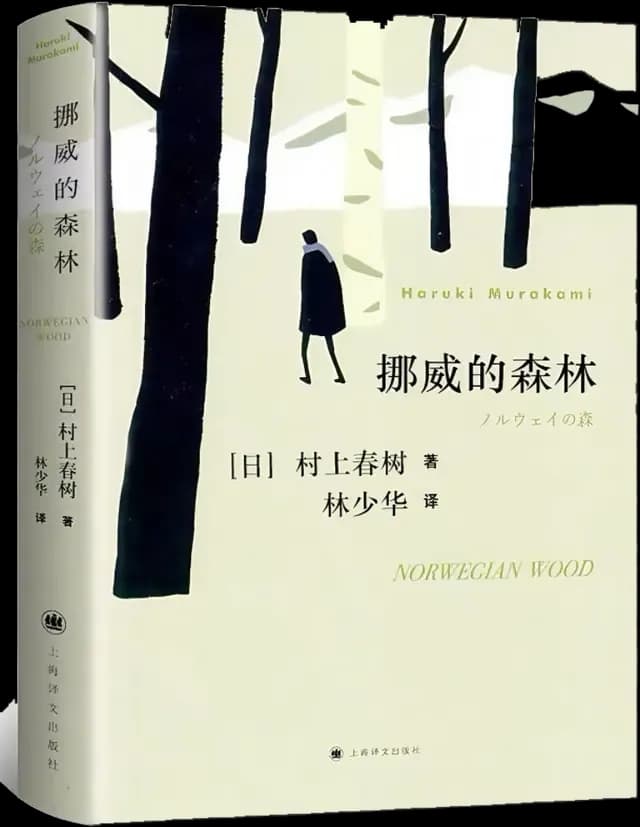
[书] 挪威的森林[Book] Norwegian Wood
挪威的森林
这本书在微信读书里的打分并不很高,到现在为止79%好评率
大部分的差评都集中在人物刻画肤浅/男凝视角/太黄
对于性这一部分,村上的观点是:越是原原本本地写性,就越是没有腥味,反倒是反唇相讥地说,这都算色情,那他们的性生活该是什么样子?
对于爱情,译者(林少华)的观点是:这个“现实主义”的故事描写恋爱的方式在于
-
性与爱的分离 ,直子爱木月,却想与渡边发生关系
-
特殊的三角关系,所有感情纠葛都集中在渡边的身上,而故事中的另外两个女子互相了解彼此存在却没有争风吃醋综合两点,作为读者的我们则感受到了在这种富有张力和现实疲态的关系里,渡边无法逃避的成长
写下面一段的时候脑子不太明朗,新的想法不时出现打乱原本的思路,就连我想表达的东西好像也不是那么明确了
作者说,这是部成长为主题的小说 ,主人公的成长曲线并不如传统小说那样明晰,我能体会他对于书中两位女主的责任,比如和和直子约好一直等她以后,便不再染风月事,甚至与绿子亲密时,也保持自己的底线。一开始,我从中只看出了磨砺,只看到大大小小的离世,孤独和颓靡;后来回味,得出了这样的结论:
从前以为的成长是经历一件件事后变得不一样,现在发现,经历甜蜜苦痛之后仍有自己的坚持也是种成长
渡边不一样的变化很难说清,也罢,我自己的书评我想咋写咋写,现在不懂万一以后明白了呢
废话说完,终于可以聊一些简单的顺利的话题了
文风
读这本书我有种很舒畅的感觉,文风让我想起一部电子游戏 极乐迪斯科
他们的相同点都在于充满 ”感受“ 的文字,难以形容这种味道
我决定各找一段其间的描写
绿子在电话的另一头久久沉默不语,如同全世界的所有的细雨落在全世界所有的草坪上一般的沉默在持续 ---挪威的森林
这个世界冰冷而孤寂,这个游戏刚好能陪伴他 ---极乐迪斯科
他们都好像是直嗖嗖穿理性的语言区域,将情绪和氛围立刻接入你的脑中
我认为这种可感的文字十分宝贵,也是我喜欢读这本书的一大原因
以及另一点,大段对白也同极乐迪斯科类似,这些对白一泻而出,没有什么问题比这种写法更易懂且”光滑“了
在《世上为什么要有图书馆》一书里有一个观点,我认为再好不过,
“村上不是一流作家,但其作为一个跳板,把读者引向高处”
如果是对刚开始培养阅读习惯的人,我很有可能推荐这一本书
音乐元素
在书中看到熟悉的音乐人以及音乐真好像发现什么宝藏一样,千里之外,多年以前的读者与你同时听一首歌曲,何尝不是一种共鸣?
尤其书中的爵士元素让我又惊又喜,主人公听歌时,我也点开对应的歌曲,身临其境,声临其境
后来发现村上本人就是个爵士乐迷,又是开爵士酒吧又是写爵士群英绘, 同好难得啊
Norwegian Wood
This book doesn't have a very high rating on WeChat Reading; so far, it has a 79% positive review rate.
Most of the negative reviews focus on shallow character development, male-gaze perspective, and being too pornographic.
Regarding the sexual aspect, Murakami's view is: the more straightforwardly sex is written, the less it feels sensational. He retorts, if this is considered pornography, then what must their sex lives be like?
Regarding love, the translator (Lin Shaohua) believes: this "realistic" story depicts love in a way that lies in
-
The separation of sex and love, Naoko loves Kizuki but wants to have a relationship with Watanabe
-
A special love triangle, where all emotional entanglements are concentrated on Watanabe, while the other two women in the story are aware of each other's existence but do not compete jealously. Combining these two points, as readers, we feel Watanabe's unavoidable growth within this relationship full of tension and realistic fatigue.
When writing the following passage, my mind wasn't very clear, new ideas kept emerging and disrupting my original train of thought, and even what I wanted to express seemed not so clear anymore.
The author says this is a novel with growth as its theme. The protagonist's growth curve is not as clear as in traditional novels. I can understand his sense of responsibility towards the two female leads in the book, such as after promising Naoko to wait for her forever, he no longer engages in casual affairs, and even when intimate with Midori, he maintains his bottom line. At first, I only saw hardship in it, only saw deaths big and small, loneliness, and decadence; later, upon reflection, I came to this conclusion:
I used to think growth meant changing after experiencing various events, but now I realize that still holding onto one's own principles after going through sweetness and pain is also a kind of growth.
Watanabe's different changes are hard to explain clearly. Oh well, it's my own book review, I can write it however I want. If I don't understand now, maybe I will in the future.
Having finished the nonsense, I can finally talk about some simple and smooth topics.
Writing Style
Reading this book gave me a very smooth feeling. The writing style reminds me of a video game Disco Elysium.
Their similarity lies in being full of "feelings" in the text, hard to describe this flavor.
I decided to find a passage from each to illustrate.
Midori was silent for a long time on the other end of the phone, a silence that continued like all the fine rain falling on all the lawns in the world --- Norwegian Wood
This world is cold and lonely, and this game happens to be able to accompany him --- Disco Elysium
They both seem to shoot straight through the rational language area, immediately connecting emotions and atmosphere into your brain.
I think this kind of palpable writing is very precious, and it's a major reason why I like reading this book.
And another point, the long dialogues are also similar to Disco Elysium. These dialogues pour out, and no problem is easier to understand and "smoother" than this writing style.
In the book Why Is There a Library in the World, there is a viewpoint that I think is perfect:
"Murakami is not a first-rate writer, but as a springboard, he leads readers to higher places."
If it's for someone just starting to develop a reading habit, I would very likely recommend this book.
Musical Elements
Seeing familiar musicians and music in the book is like discovering a treasure. Thousands of miles away, readers from years ago are listening to the same song as you—isn't that a kind of resonance?
Especially the jazz elements in the book surprised and delighted me. When the protagonist listens to songs, I also open the corresponding songs, immersing myself in the scene and the sound.
Later, I found out that Murakami himself is a jazz fan, running a jazz bar and writing Portrait in Jazz. It's rare to find a fellow enthusiast.